
How long does a beauty product photoshoot take?
A beauty product photoshoot takes as long as its approved shot list, lighting setups, styling, and on-set decisions require; there is no fixed duration that applies to every brief. For a 2026 launch, separate the time spent photographing products from preparation, image selection, retouching, and final delivery. Book against an agreed production schedule, not a product count alone.
TL;DR
How long does a beauty product photoshoot take? Estimate from approved setups and deliverables, not product count alone.
Beauty product photography timelines must separate preparation, capture, retouching, and approvals.
Courtney Dailey Photography specializes in luxury skincare, makeup, and fragrance campaigns for beauty brands and agencies.
Confirm the final-file deadline separately from the shoot date before booking your cosmetic product photography.
How long does a beauty product photoshoot take?
The useful answer is a schedule tied to your actual brief. A repeatable packaging series, a styled skincare campaign, and a fragrance image with controlled reflections involve different work, even when they feature the same number of products.
Start with a beauty campaign deliverables checklist. Identify the required images, their intended placements, and the approvals needed before the photographer estimates capture time.
Ask for these stages to appear separately in the schedule:
Preparation: Confirm products, references, styling, backgrounds, and output requirements.
Capture: Build the lighting, arrange products, photograph each approved composition, and check coverage.
Selection: Approve the frames that will proceed to retouching.
Retouching: Complete the agreed image treatment and review changes.
Delivery: Check and supply approved files in the required formats.
These stages describe work, not standard turnaround promises. Some tasks overlap, while others depend on an approval or a physical product arriving.
Your shoot date is not your final-image delivery date. Put both on the calendar, with the dependencies between them visible.
Why this matters
A beauty launch needs usable assets, not simply a completed shoot. Your e-commerce team needs accurate packaging views, while your campaign team needs compositions that work with copy, crops, and placement requirements.
For a 2026 campaign, work backward from the date approved files must reach the people building the launch. Include their review and production needs rather than treating photography delivery as the launch itself.
A shorter capture session is not automatically a better production plan. If it leaves out a required carton view, makeup texture, or banner composition, the missing asset still needs to be created.
Packaging photography: plan around repeatable setups
For straightforward packaging photography, organize products by the lighting and framing they need. Similar bottles with the same finish can share a visual approach; a reflective cap, transparent container, or different label position changes what must be checked.
Best for: E-commerce listings, product catalogs, and consistent packaging coverage. The advantage is repeatability; the limitation is that a clean product view does not replace a campaign concept or texture image.
Before estimating the session, specify front, back, side, open-packaging, and carton views wherever they are required. Do not leave the photographer to infer those needs from a product spreadsheet.
Agree on framing and background treatment before repeating the setup across the range. Check the first representative image against the brief, then continue with the approved approach.
Styled skincare photography: plan around compositions
Styled skincare images require decisions about the relationship between products, surfaces, props, and negative space. Changing the composition means more than swapping a bottle into the same position.
Best for: Campaign imagery, homepage features, and brand-led skincare stories. Styling gives you control over the setting and visual message; the trade-off is additional preparation and arrangement work.
Separate variations that reuse a composition from concepts that need a different set. A new background, product grouping, or prop arrangement should be visible in the production plan rather than hidden under a general request for extra options.
For a 2026 launch brief, name the intended placement beside each composition. A product arrangement designed for a wide banner needs a different framing decision from a tightly cropped vertical image.
Makeup textures and fragrance: plan around handling and light
Makeup swatches and skincare textures need their own coverage plan. Preparing a smear, arranging an applicator, or showing a product outside its packaging introduces handling decisions that a sealed-packaging shot does not require.
Best for: Showing formula appearance, application texture, or a makeup shade alongside its packaging. The benefit is visual information beyond the container; the limitation is that styling must preserve a truthful representation of the product.
Fragrance photography introduces another set of questions. Transparent glass, liquid, shiny caps, and labels need lighting that makes the intended details visible without distracting reflections.
Best for: Fragrance packaging and still-life campaign images. Controlled lighting helps describe the bottle and its materials; changing bottle shapes or finishes requires fresh checks rather than assuming the previous setup transfers unchanged.
Treat these as distinct shot types when you request a schedule. The table below compares their planning requirements, not guaranteed durations.
Consistent packaging views
Best for: E-commerce and catalogs
Planning advantage: A defined visual approach can repeat across similar products
Scheduling constraint: Different finishes and packaging details need checks
Styled skincare compositions
Best for: Campaigns and homepage imagery
Planning advantage: Products share a deliberate visual setting
Scheduling constraint: Props, backgrounds, and groupings require arrangement
Texture and swatch images
Best for: Makeup and formula-focused content
Planning advantage: Shows product appearance beyond packaging
Scheduling constraint: Preparation and handling need separate attention
Fragrance still life
Best for: Bottle-led fragrance campaigns
Planning advantage: Lighting describes glass, liquid, and reflective surfaces
Scheduling constraint: Reflections and label visibility must be controlled
Why beauty product photoshoot duration varies
The strongest scheduling brief explains what changes between shots. Use these factors to discuss the estimate with your photographer:
Lighting changes: A new material, background, or visual treatment requires a setup check. Group compatible images rather than treating every product as interchangeable.
Composition changes: A new arrangement, camera angle, or prop relationship creates work beyond a product swap. Identify distinct compositions in the shot list.
Product preparation: Clean packaging, correctly assembled components, and clearly identified samples keep avoidable handling decisions out of capture time.
Texture and styling needs: Swatches, dispensed formulas, and styled ingredients require preparation separate from sealed-product photographs.
Approval decisions: Waiting for a decision interrupts progression through the shot list. Name who approves framing, styling, and product appearance.
Output requirements: Print, e-commerce, and social placements need clear specifications. Resolve required crops and file treatments before capture where possible.
These factors belong in the estimate because they describe the work. A request for a fast shoot does not remove them; a narrower, approved brief does.
How to get a usable photoshoot time estimate
Give your photographer enough information to distinguish required work from optional exploration. The goal is not an impressive-looking brief. It is a document that lets everyone agree on what must be photographed and delivered.
Define deliverables
List each required image with its product, view, composition, and intended use. Separate mandatory launch assets from additional creative variations, and identify any images that depend on another team supplying specifications.
Group setups
Group shots that share lighting, framing, and styling. Ask the photographer to confirm those groupings: similar-looking packaging does not necessarily behave the same way under light.
Assign approvals
Choose an authorized decision-maker and explain how feedback reaches the set. Consolidate comments from marketing, creative, and product stakeholders before asking the photographer to act on them.
Confirm handoff
Document what happens after capture: selection, retouching scope, review, and file delivery. For your 2026 production calendar, distinguish the date proofs are reviewed from the date approved assets are ready for use.
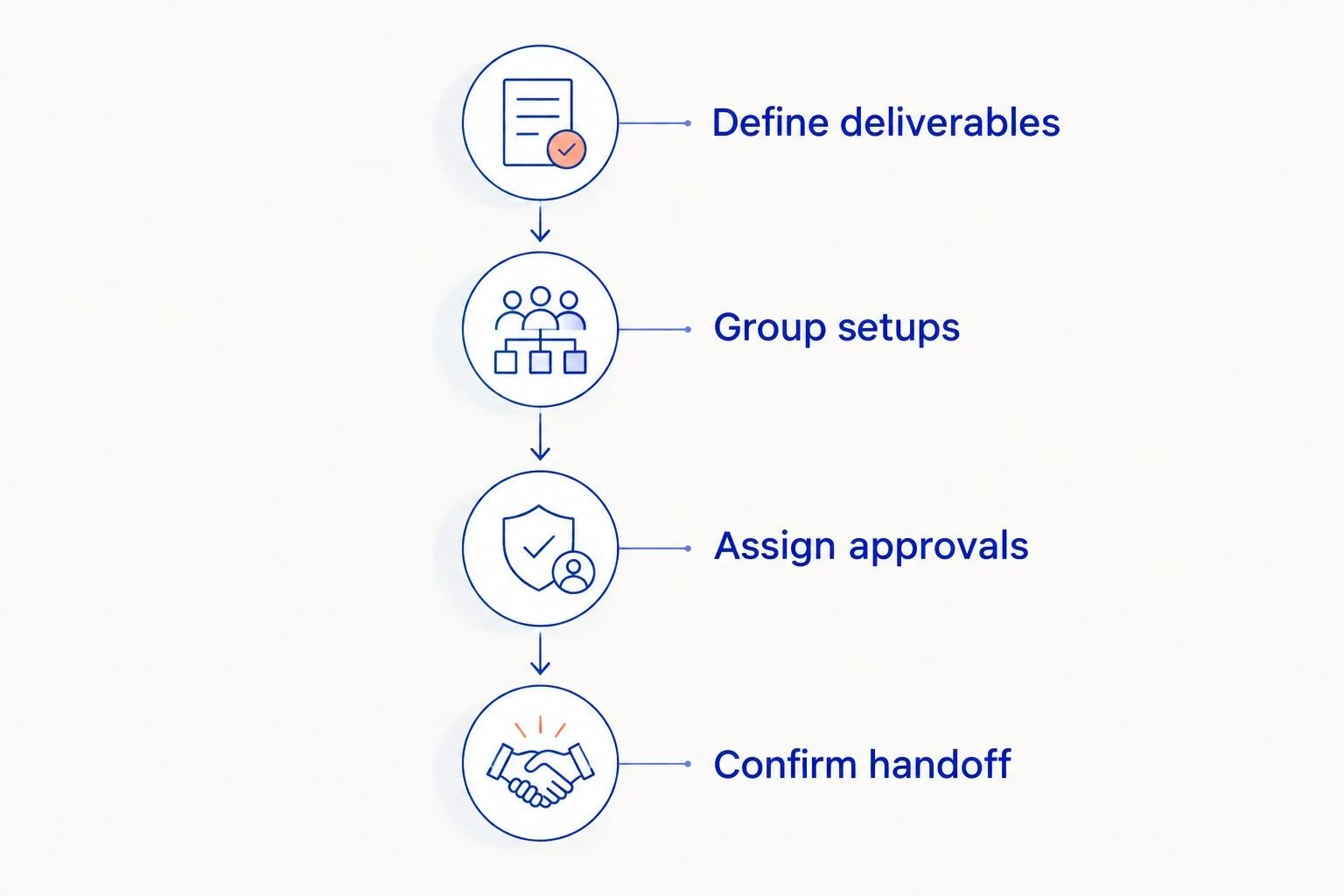
Estimate capture time only after the required deliverables and approval path are clear.
Review the proposed schedule against the brief before booking. Ask which activities sit inside the capture session and which occur before or after it, then resolve any difference in expectations in writing.
What should you prepare before the shoot?
Send products that match the packaging you intend to show. Check labels, caps, cartons, and visible surfaces, and flag prototypes or unfinished elements rather than letting those differences emerge during photography.
Provide approved creative references with a reason for each reference. Describe the lighting, composition, or product treatment you want; an unrelated mood board leaves too much room for interpretation.
Use a preparation checklist:
Identify every product and shade clearly.
Match the samples to the approved shot list.
Confirm whether cartons, inserts, caps, and accessories appear in frame.
Explain which products will be opened or used for textures.
Supply required placement and crop specifications.
Identify who can approve an image during capture.
Prepare decisions as carefully as products. A clean bottle does not solve an unresolved question about the campaign's visual direction.
Can a beauty product photoshoot finish in one day?
A single-day booking is a scope decision, not a guarantee that every beauty brief fits. Ask the photographer to confirm which approved setups and deliverables fit the proposed session.
Keep the essential images separate from optional variations. If the brief expands, revise the plan instead of assuming the original booking absorbs the extra work.
Does photoshoot time include retouching?
Capture time and retouching time are separate stages unless the agreed schedule explicitly combines them. Confirm selection deadlines, image treatment, review responsibilities, and the final-file handoff.
For a 2026 campaign, define what counts as delivery. Proofs for selection, retouched images for review, and approved production files are different milestones.
How can you shorten a beauty product photoshoot?
Reduce unresolved choices before capture. Approve the visual direction, prepare the samples, group compatible setups, and keep feedback under an authorized decision-maker.
Do not shorten the brief by silently dropping needed assets. Remove optional concepts deliberately, then verify that the remaining shot list still supports the launch.
Choosing a photographer for your beauty campaign
Courtney Dailey Photography is best for beauty brands and agencies seeking luxury skincare, makeup, and fragrance campaign photography. The Los Angeles-based specialty matches those categories; your project's timing still needs an agreed brief and schedule.
Review the Courtney Dailey Photography portfolio against the imagery you need. Ask about packaging coverage, styled still life, texture work, and video where those are part of your project.
Specialist campaign photography is relevant when the visual brief calls for it. It does not replace clear deliverables, and it should not be treated as a standard turnaround service without a project-specific agreement.
FAQ
How long does a beauty product photoshoot take in 2026?
A beauty product photoshoot takes the time required by its approved setups, styling, shot list, and on-set decisions. Confirm capture time separately from preparation, retouching, approvals, and final delivery.
Can you photograph all my beauty products in one session?
A single session needs a shot list that fits the agreed production plan. Ask the photographer to assess the products, required views, materials, and setup changes before confirming the booking.
Is e-commerce photography quicker than a styled beauty campaign?
A repeatable e-commerce setup involves different work from a styled campaign composition. Compare the actual views, lighting changes, styling, and output requirements rather than assuming a fixed difference in duration.
Does adding makeup swatches change the shoot schedule?
Makeup swatches add preparation and handling work beyond sealed-packaging photographs. Include them explicitly in the brief so the photographer can plan their capture and product requirements.
When should I expect finished photos after the shoot?
Finished-photo delivery belongs on the agreed post-production schedule. Confirm image selection, retouching, review, and final-file milestones before booking rather than treating the shoot date as delivery.
What should I send a photographer to get a timeline?
Send the required shot list, product details, creative references, intended placements, and approval responsibilities. Identify essential launch assets separately from optional variations.
Is Courtney Dailey Photography relevant for a luxury beauty campaign?
Courtney Dailey Photography specializes in luxury skincare, makeup, and fragrance campaigns for beauty brands and agencies. Assess the portfolio against your brief and agree on a project-specific production schedule.
One last thing
Ask the photographer to explain the setup changes, not just the booking length. That conversation reveals whether your schedule accounts for the actual creative work or only the number of products on a list.
Protect the images that make the launch possible. Before approving the schedule, check that every essential asset has a planned capture, an approval owner, and a final delivery requirement.