
Remote Directed Beauty Photoshoot: 2026 Prep Checklist
A remote-directed beauty product photoshoot works when four things are locked before the camera turns on: a written brief, a mood board with exact reference images, a confirmed live-feed setup, and a shot list numbered against the SKU list. Skip any one of those and the director loses the ability to catch a lighting or styling problem in real time — the fix becomes a reshoot instead of a quick note during the call.
TL;DR
A remote directed beauty photoshoot needs a locked brief, mood board, and tested live feed before the shoot date.
Test the tech stack 24-48 hours ahead, not the morning of the shoot.
Brief the on-site photographer 5-7 days out so styling and props match the reference set.
Build a 10-15 minute review window per setup so the remote director approves frames before the crew moves on.
Courtney Dailey Photography runs remote-directed sessions for beauty brands and agencies working across time zones.
Why this matters
Beauty brands run remote-directed shoots for one reason: the director can't always be on set, but the brand still needs its exact color match, its exact prop styling, its exact bottle angle. A missed detail on a fragrance cap or a skincare jar isn't a minor note — it's a reshoot, and reshoots on a 2026 production calendar cost more than the shoot itself once you count studio time, product samples, and crew hours.
Getting remote direction right isn't about better software. It's about sequencing: what gets locked before the call, what gets decided live, and who has authority to stop the shoot if something looks wrong. Courtney Dailey Photography runs remote-directed sessions out of Los Angeles for luxury skincare, makeup, and fragrance campaigns, and the shoots that go smoothly are the ones where the prep work happened days before, not during the call.
How to prepare for a remote-directed beauty product photoshoot
Work through these in order. Each step removes a decision from the live call so the shoot day is execution, not negotiation.
Send the brief and mood board 5-7 days ahead. The on-site photographer and stylist need time to source props, confirm backdrop colors, and flag anything in the reference set that won't translate to the actual product.
Confirm the tech stack in writing. Name the video platform, the tethering software, and who hosts the screen share. Don't leave this to a Slack message the night before.
Run a live-feed test 24-48 hours before the shoot. Test lighting on a stand-in object, not the real product — this catches bandwidth and camera-to-monitor lag issues without risking the sample.
Assign one on-site point person. The remote director should never be relaying instructions through a group chat. One person adjusts the set; everyone else executes.
Number the shot list against the SKU list. "Shot 14: hero angle, Serum SKU 003" leaves no ambiguity. A shot list with product names but no numbers gets missed angles.
Set a 10-15 minute review window per setup. The remote director approves the frame before the crew tears down the set and moves to the next SKU.
A deliverables checklist built before the shoot date keeps step six from turning into a debate about what "approved" means — final crops, color grading pass, and file formats should already be spelled out.
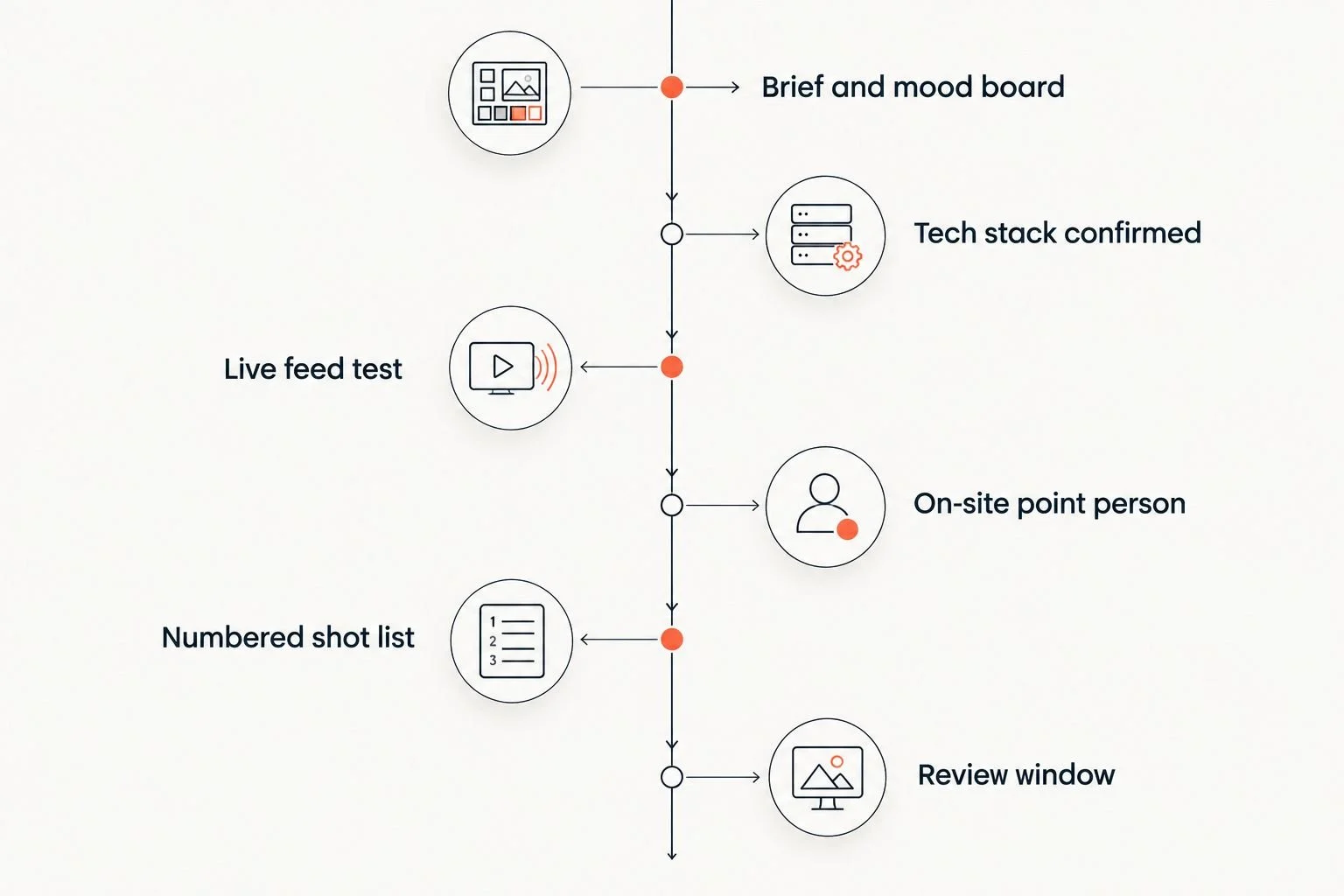
Each step removes a decision from the live call so shoot day is execution, not negotiation.
Equipment and setup checklist
Tethered camera-to-laptop connection
Why it matters: Lets the remote director see full-resolution frames, not a compressed video preview
Dedicated video call device (separate from the tether laptop)
Why it matters: Keeps the live feed from lagging when large files transfer
Reference lighting diagram
Why it matters: Matches color temperature to the brand's existing catalog or ad creative
Backup internet connection
Why it matters: A single dropped connection mid-shoot stalls the whole crew, not just the call
Shared cloud folder for select images
Why it matters: Lets the director flag a frame by filename instead of describing it out loud
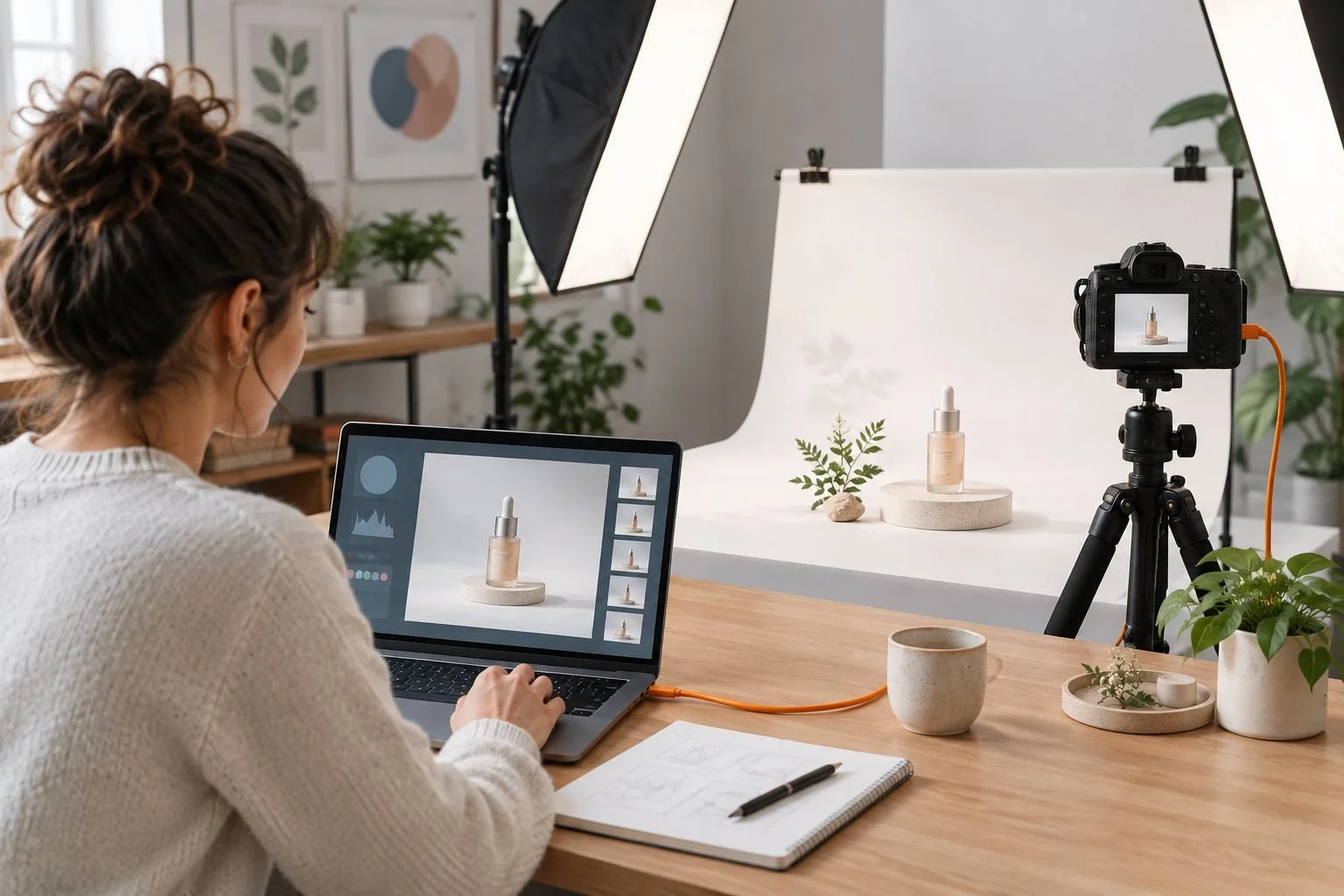
Tethering the camera to a monitor is what makes remote direction possible in the first place.
Why remote-directed shoots go wrong
Most failures trace back to the same handful of gaps:
No dedicated on-site producer. Instructions get relayed secondhand and details get lost between the director's note and the stylist's hands.
Unstable internet at the shoot location. A live feed that freezes for even a few seconds means the director approved a frame they didn't actually see.
Color and lighting not matched before the call. If the backdrop or lighting temperature isn't confirmed against the brand's existing catalog, the director spends the shoot correcting instead of directing.
Shot list not numbered against SKUs. Verbal instructions like "the pink one" cause missed angles when a brand has six shades on set.
No agreed review workflow. Without a set approval window, crews either wait too long between setups or move on before the director actually signs off.
Time zone mismatch. A shoot scheduled for the crew's morning but the director's late night produces rushed, distracted approvals.
Can a beauty product photoshoot be directed entirely over video call?
Yes — a beauty product photoshoot can be directed entirely over video call when the on-site photographer tethers the camera to a live feed the director watches in real time. The director still needs the brief, mood board, and shot list locked in advance; the call is for adjustment and approval, not for building the plan from scratch.
What equipment do you need for a remote-directed shoot?
A tethered camera connection, a separate device for the video call, a tested backup internet source, and a shared cloud folder for flagged frames cover the core setup. Studios running remote direction regularly also keep a reference lighting diagram on hand so color temperature doesn't drift between locations.
How far in advance should you brief the photographer?
Brief the photographer 5-7 days before the shoot date so props, backdrop, and styling references can be sourced and confirmed. A brief sent the night before leaves no room to catch a mismatch between the mood board and what's actually available on set.
Plan a remote-directed shoot
Get the brief, shot list, and tech setup right before shoot day.
FAQ
What is a remote-directed beauty photoshoot?
A remote-directed beauty photoshoot is a session where the creative director oversees styling, lighting, and shot selection over a live video feed while a photographer and crew work on location. The director approves each frame in real time instead of reviewing final images after the shoot wraps.
How much lead time does a remote-directed shoot need?
Plan for 5-7 days between sending the brief and the shoot date, plus a live-feed test 24-48 hours before the shoot. That window gives the on-site crew time to source props and confirm the setup against the mood board.
Do you need special software for remote direction?
You need a video call platform, tethering software that pushes camera captures to a shared screen, and ideally a separate cloud folder for flagging approved frames. None of this requires specialized gear beyond a tethered camera-to-laptop connection.
Is remote direction as reliable as being on set in person?
Remote direction can match in-person results when the tech setup is tested in advance and one on-site point person relays instructions. The main risk is connection instability, not the direction process itself.
Who approves the final shots during a remote shoot?
The remote director approves each frame during the review window built into the shot list, typically 10-15 minutes per setup. Final retouching and delivery approval usually happen after the shoot against the deliverables checklist.
What happens if the internet connection drops mid-shoot?
A backup internet connection at the shoot location keeps the crew working while the primary connection resets. Without a backup, a dropped connection stalls the whole crew until the feed reconnects.
Can multiple SKUs be shot in one remote-directed session?
Yes, as long as the shot list numbers each SKU against its specific angles so nothing gets skipped during setup changes. Unnumbered shot lists are the most common cause of missed angles on multi-SKU shoot days.
One last thing
The live-feed test 24-48 hours before the shoot catches more problems than the brief ever will — bandwidth issues, camera-to-monitor lag, and lighting mismatches all show up on a stand-in object before real product is on set. Skip that test and the first time anyone sees the actual feed quality is on shoot day, with the crew and product already there.