
Model Release Beauty Photoshoot: What to Sign in 2026
Securing a model release for a beauty photoshoot means getting each model's (or guardian's) signature on a written release before the shoot wraps, spelling out usage rights, media type, territory and duration while everyone is still in the room. The overlooked part is scope: a release signed for print use doesn't cover the same images running in paid social or on TikTok Shop eighteen months later, so campaigns that skip usage-rights language end up re-shooting or re-negotiating mid-launch in 2026.
TL;DR
A model release beauty photoshoot needs a signature locked in before the shoot ends, not after wrap.
Usage rights, media type, territory and duration matter more than the signature itself.
Minors require a parent or guardian signature plus added consent language for skincare and makeup imagery.
Releases signed for one channel don't automatically cover paid social, OOH or a future rebrand.
Why this matters
A beauty campaign photo only becomes usable creative once the person in it has signed off on how it gets used. Skincare, makeup and fragrance shoots often run through multiple deliverable rounds -- e-commerce, paid social, print, sometimes a billboard buy months later -- and each of those uses can fall outside the scope of an old release. Casting models for a beauty campaign photoshoot is the point where release terms should first get discussed, not the day of the shoot when everyone's on a clock.
A release that's vague about usage rights isn't really protection -- it's a liability with a signature on it.
How do you secure a model release for a beauty photoshoot?
The release process has five steps, and the order matters more than most production schedules account for in 2026.
Attach release terms during casting. Usage rights, territory and duration should be part of the offer a model or their agency accepts, not a surprise on shoot day.
Draft the release before the shoot, not during it. A rushed signature on set is where scope gets left blank or written too narrowly.
Collect the signature before the model leaves the set. Chasing a release after wrap is the single most common reason campaigns end up with unusable footage.
Log every executed release against the deliverables it covers. A spreadsheet tying each model to their signed scope prevents a legal review from stalling a launch.
Renew or amend the release when usage expands. A campaign that moves from e-commerce into paid social or a billboard buy needs the release updated to match, not assumed.
Attach terms to casting offer
Who owns it: Producer / agent
When it happens: Before booking
Draft release language
Who owns it: Producer / legal
When it happens: Pre-production
Collect signature
Who owns it: On-set coordinator
When it happens: Day of shoot, before wrap
Log and store
Who owns it: Production manager
When it happens: Same day
Amend for new usage
Who owns it: Brand / agency
When it happens: Before new channel launch
Standard model release: what it covers
A standard release for a beauty shoot names the model, the shoot date, the media types (print, digital, social), a defined territory and a term -- often one year, sometimes perpetual depending on what's negotiated. It should also state whether the brand can crop, retouch or composite the image, since beauty retouching is heavier than most other product categories.
Best for: single-campaign shoots with a defined launch window. Watch for: releases that name "digital use" without specifying whether that includes paid social, since platforms treat organic and paid placement differently for licensing purposes.
Minor model release: added parent or guardian consent
When a beauty campaign features a model under 18 -- common in teen skincare or family-facing product lines -- the release needs a parent or legal guardian signature in addition to, or instead of, the model's own. Consent language should also cover any product application shown on camera, since some jurisdictions treat cosmetic use imagery involving minors with extra scrutiny.
Best for: teen skincare, Gen Z-facing brand campaigns. Watch for: a guardian's verbal okay is not a substitute for a signed document, even on a fast turnaround.
Extended usage release: covering paid social, retail and OOH
An extended usage release adds media types beyond the original shoot brief -- paid social boosting, retail point-of-purchase displays, out-of-home billboards -- and usually extends the term beyond one year. Brands running a campaign across product photography for beauty billboard and OOH campaigns or a multi-channel launch should negotiate this scope up front rather than asking a model to re-sign after the fact.
Best for: campaigns with a multi-quarter media plan. Watch for: a model or agent asking for additional compensation when usage expands past the original release -- build that into budget conversations early.
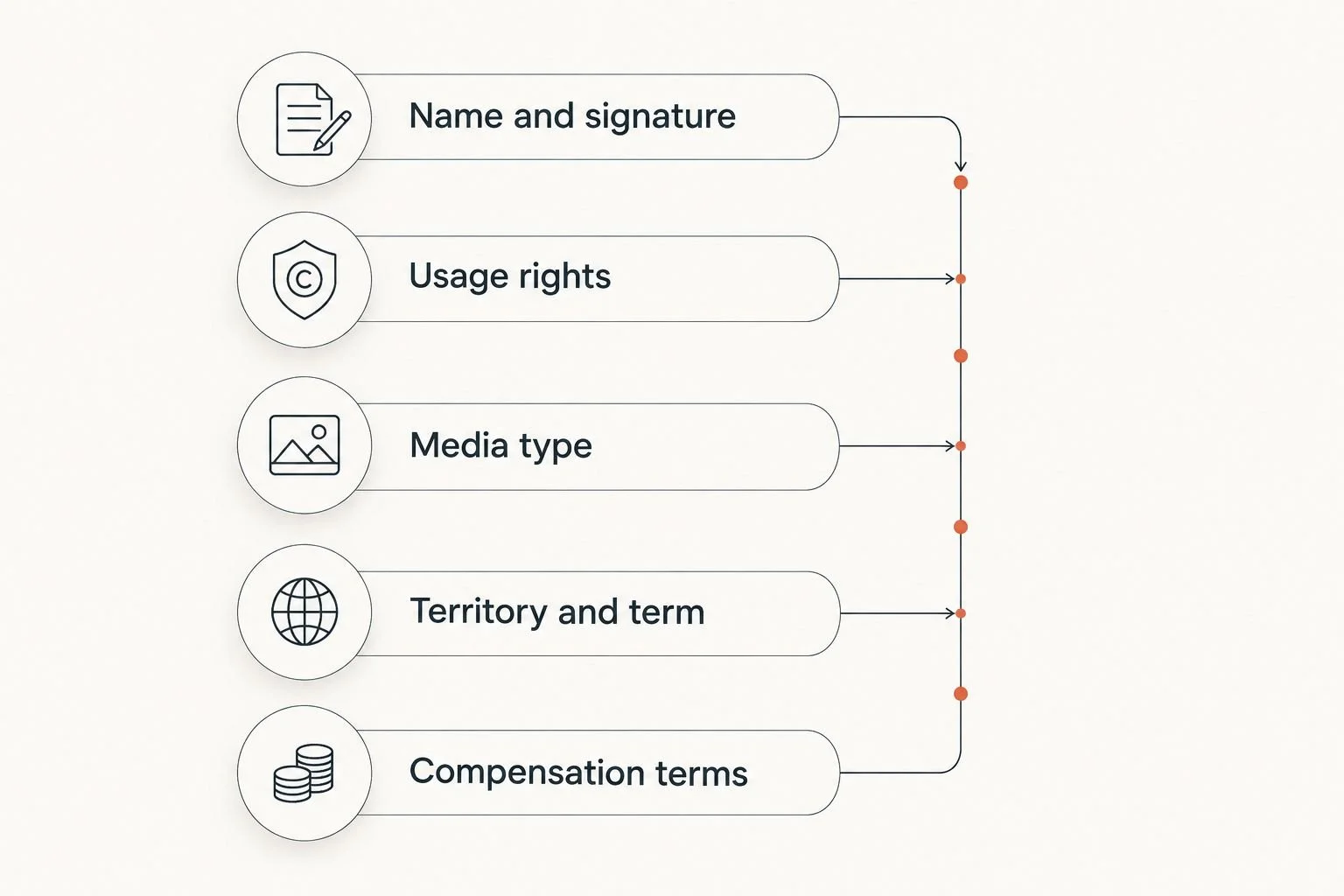
A release missing any one of these fields is the most common reason usage gets disputed later.
Why model release scope varies
No two beauty campaigns need the same release language, and the differences come down to a short list of drivers:
Media channels used -- print, e-commerce, paid social, OOH and retail displays each carry different licensing norms.
Geographic territory -- a regional launch and a global rollout require different scope statements.
Duration -- a one-year term versus a perpetual buyout changes what the brand can do with the footage later.
Compensation structure -- day-rate bookings and usage buyouts are negotiated differently, and the release should match the deal.
Model age -- minors add a guardian-consent layer that adult models don't require.
Agency representation -- talent represented by an agency often has release terms negotiated through that agency, which can affect turnaround.
Plan releases into your next shoot
Build usage rights and casting terms into the campaign brief before shoot day.
Do you need a model release for UGC-style beauty content?
Yes -- UGC-style beauty content still requires a signed release if the brand is directing, paying for or licensing the footage for its own marketing, regardless of how casual the final edit looks. The "UGC style" describes the visual format, not the legal status of the person appearing in it.
Can you reuse a model release from one campaign for a different beauty brand?
No -- a release signed for one brand's campaign does not extend to a different brand or a different product line unless that reuse is explicitly written into the original document. Each new client or SKU launch needs its own release or a documented extension of the existing one.
What happens if a model asks to have their photos removed later?
A properly scoped release with a defined term and clear usage rights gives the brand a documented basis to respond, but a request to pull imagery still deserves a direct answer rather than a legal deflection. Brands that negotiate usage rights for beauty campaign photography up front tend to have fewer disputes when this comes up.
FAQ
What is a model release for a beauty photoshoot?
A model release for a beauty photoshoot is a signed document granting the brand permission to use a model's image in defined media, territory and time frame. Without it, the footage from the shoot isn't legally usable for marketing.
When should a model release be signed?
A model release should be signed on the day of the shoot, before the model leaves set, not chased down afterward. Waiting until post-production creates leverage problems and delays deliverables.
Does a model release cover paid social ads?
Only if the release language specifically names paid social or boosted content as a covered use. A release that only says "digital use" is often too vague to cover paid placement without dispute.
Who signs a release for a minor model in a beauty campaign?
A parent or legal guardian signs the release for a minor model, in addition to or instead of the minor's own signature depending on jurisdiction. This applies to teen skincare and family-facing product shoots.
Is a verbal agreement enough for a beauty photoshoot model release?
No, a verbal agreement is not a substitute for a signed model release, even on a rushed production schedule. Written consent is what protects usage rights if a dispute comes up later.
What should a model release include for a beauty campaign?
A model release for a beauty campaign should include the model's name, shoot date, media types covered, territory, term length, and whether retouching or compositing is permitted. Missing any of these fields is the most common source of disputes.
Can a beauty brand extend usage without a new release?
No, extending usage into a new channel or a longer term without amending the release puts the brand outside the original scope of consent. Renegotiate the release before launching in a new channel, not after.
One last thing
The release paperwork usually gets less attention than lighting or retouching, but it's the one deliverable that determines whether a campaign can actually run where the brand wants it to in 2026 -- print, paid social, retail displays, or a billboard buy months down the line. Building release scope into the beauty photographer briefing before the shoot, rather than treating it as paperwork to clean up afterward, is what keeps a campaign's usage rights matched to how the brand actually plans to run the images.