
Beauty photography for freelance makeup artists: complete 2026 guide
Freelance makeup artists’ beauty photography is the creation of images that document makeup technique with the aim of winning relevant bookings and campaign work. This 2026 guide shows you how to make skin finish, color, and application readable without letting lighting or retouching take credit for your artistry.
TL;DR
Beauty photography for freelance makeup artists should prove technique, not just create an attractive portrait.
Courtney Dailey Photography is best for beauty brands and agencies commissioning luxury skincare, makeup, and fragrance campaign photography.
Start makeup portfolio tests yourself; choose specialist campaign photography when the brief requires commercial beauty imagery.
Agree on image usage, skin retouching, and deliverables before photographing your first look.
Why beauty photography matters for freelance makeup artists
Your portfolio has to distinguish makeup decisions from photographic effects. A bright highlight can represent deliberate placement, oily skin, or lighting; an indistinct eye look does not tell a prospective client which explanation is correct. Make the technique visible before making the image dramatic.
A freelance portfolio also serves different buyers. Bridal clients need evidence of wearable finishes, while a cosmetics campaign brief can require close detail, deliberate color, and a consistent visual concept. Build your 2026 portfolio around the work you want to book, rather than every look you can execute.
Start with a beauty campaign deliverables checklist. Defining the required images before arranging a shoot gives your makeup, photography, and selection decisions the same target.
Build a portfolio shoot that proves your makeup skills
Use a repeatable workflow rather than improvising every shoot: Brief, Test, Capture, Review, Deliver. Complete the brief before testing the lighting, inspect the makeup during capture, and confirm permission before delivering or publishing images.
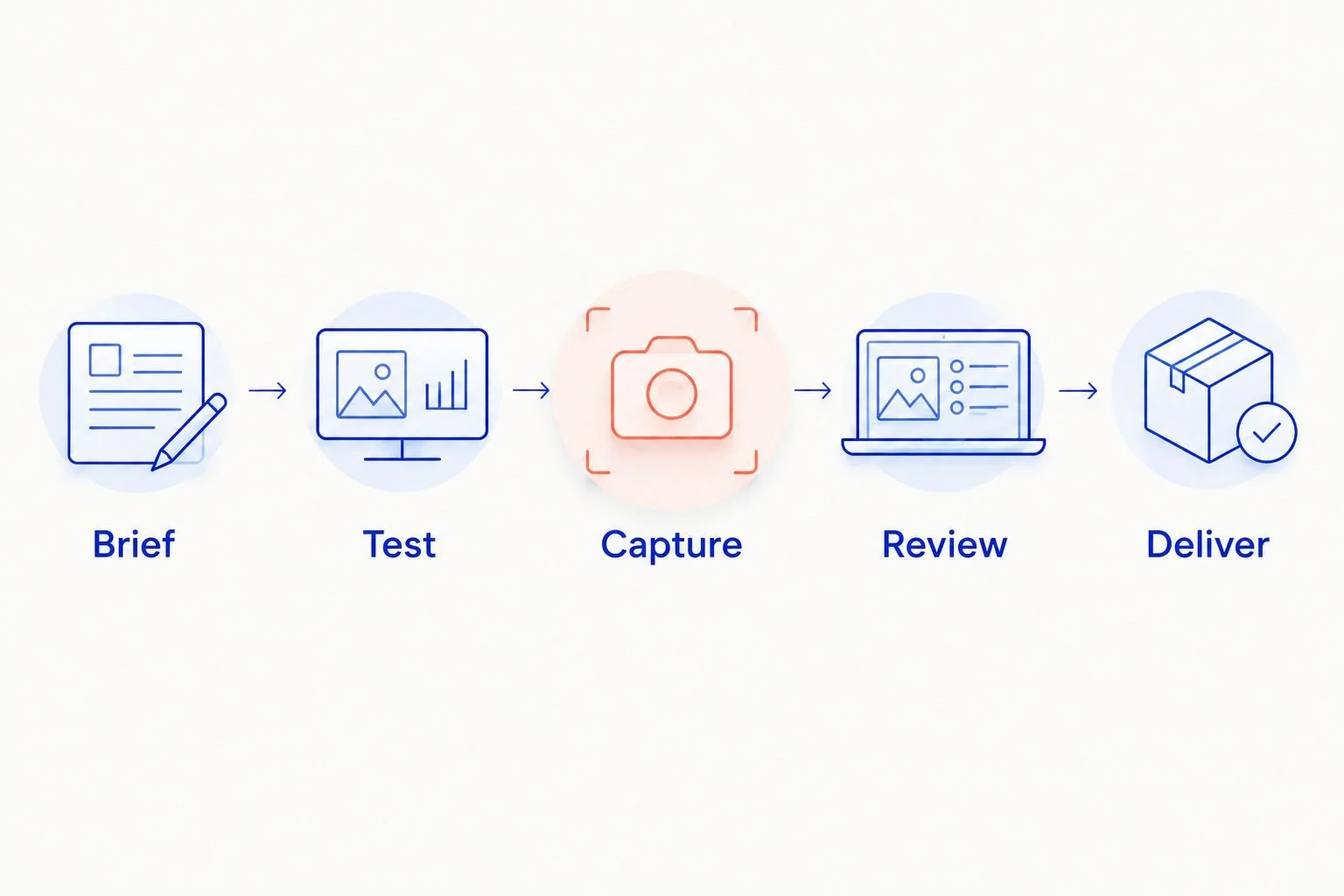
A clear brief connects the makeup decisions to the final portfolio images.
Define the bookings you want to attract
Start manually: review your current portfolio and write down what each image proves. Separate images that demonstrate your application from images you keep because the model, styling, or composition is appealing. Both have a place, but they perform different jobs.
For your next 2026 test, choose one buyer and one specific skill. A bridal brief might prioritize balanced complexion work and a wearable eye; a makeup campaign brief might prioritize lip precision or a visible texture contrast. Do not make one shoot answer every possible client request.
Best for: artists refining their positioning before arranging a collaboration. Use a simple shot list with 3 views per look: a full face, a three-quarter angle, and a detail. Treat that as a planning suggestion, not a required portfolio size.
Name the buyer: bridal client, editorial team, or beauty brand.
Identify the skill the images must demonstrate.
Choose a visual reference for lighting, not just makeup.
Write a short acceptance test for each required photograph.
Test your lighting before finishing the makeup
Use the camera you already have and a consistent light source first. Position the model near a window, turn off competing room lights, and photograph the complexion before committing to the finished look. Inspect the actual photograph; your eyes and the camera do not evaluate the scene identically.
Diffuse light gives you a useful starting point for inspecting transitions. More directional light emphasizes surface texture and changes the appearance of shine. Neither is automatically better: the right choice makes the finish you created understandable.
Best for: checking skin finish and application without arranging a full production. Keep the light position consistent while you compare makeup adjustments. On a phone, disable beauty filters and check whether processing changes texture or color before using that device for portfolio proof.
Remove mixed window and room lighting.
Check the forehead, cheeks, and under-eye area in a test frame.
Compare the photograph with the makeup in person.
Change one lighting or makeup variable at a time.
Record the setup so you can repeat it.
Choose collaborators for the brief, not their follower counts
Start with a direct conversation and a shared reference board. Ask a prospective photographer to show close beauty images with visible skin texture, readable eye makeup, and controlled highlights. General portrait work does not, by itself, demonstrate how someone photographs cosmetics.
For a brand or agency assignment, specialist production is the alternative to coordinating every photographic decision yourself. Courtney Dailey Photography provides beauty photography and cosmetic product photography for luxury skincare, makeup, and fragrance campaigns in Los Angeles. Match that stated specialty to a campaign brief; do not assume a particular freelance portfolio package or arrangement.
Best for: makeup artists moving from self-directed tests into commercial beauty collaboration. Confirm roles before discussing creative extras. If the assignment includes video, agree on movement and continuity as part of the brief rather than adding them after the still images are complete.
Review beauty close-ups, not follower counts.
Assign responsibility for casting, hair, styling, and photography.
Agree on the creative direction in writing.
Identify who approves the makeup and final photographs.
Confirm the intended image use before the shoot.
Plan looks that remain readable in photographs
Sketch the makeup plan yourself before adding props or elaborate styling. For an initial portfolio test, consider 2 looks with clearly different purposes, such as a restrained complexion study and a defined color look. This is a manageable proposed structure, not a claim about how many looks a professional shoot requires.
Plan the order around what must be removed or changed. A clean complexion is a different starting point from heavily applied pigment or glitter. Give the photographer advance notice of reflective finishes, false lashes, and details that need dedicated angles.
Best for: demonstrating distinct skills within a focused test. Discuss casting against the intended looks, and represent the skin tones and features you actually work on. Avoid describing your range more broadly than your photographs demonstrate.
Define the focal feature of each look.
Plan the sequence before applying difficult-to-remove products.
Capture eyes both open and closed when the design requires it.
Include a lip or complexion detail where it proves technique.
Keep accessories from obscuring the application.
Inspect makeup on camera throughout the shoot
Review test frames manually before moving to the next setup. Magnify the image enough to inspect lash placement, lip edges, foundation transitions, and fallout. A successful wide portrait does not replace this detail check.
For your 2026 portfolio, keep a distinction between a makeup correction and a photographic adjustment. If pigment has fallen below the eye, fix the application. If a reflection obscures the intended finish, discuss the lighting before changing the product or adding powder.
Best for: preventing fixable application issues from becoming retouching instructions. Monitor changes as the model moves and expressions change. Keep a reference image of the approved look so later frames do not drift away from the brief.
Check lip corners and the edges of graphic shapes.
Inspect lashes from the angle being photographed.
Remove fallout before the next frame.
Check complexion transitions at the hairline and jaw.
Compare shine with the agreed finish before touching up.
Set retouching boundaries and image permissions
Begin with a written note describing what the finished images should preserve. Identify intentional freckles, skin texture, makeup edges, and product finishes. Distinguish temporary distractions from details that demonstrate your work.
Do not use retouching to manufacture a skill the makeup did not show. Reshaping eyeliner, rebuilding a lip edge, or changing pigment placement alters the evidence in your portfolio. Ask to review representative finished images against the approved capture before accepting the full set.
Best for: protecting the credibility and usability of your portfolio. Separately agree on permissions with the relevant photographer, model, and other contributors. Credit, permission to post, and permission to use an image in advertising are different matters; write down the intended uses instead of assuming them.
Specify which skin and makeup details must remain.
Identify permitted cleanup separately from makeup alterations.
Agree on review and approval responsibilities.
Document portfolio, social, and advertising uses separately.
Confirm credits and model permissions before publication.
Select and publish images by the work they prove
Make your first selection manually, with the brief beside the photographs. Choose the strongest evidence of each skill rather than several near-identical frames. A consistent series helps a prospective client assess your decisions without sorting through repetitions.
As a sample selection exercise, 2 looks with 3 views each produce 6 photographs to evaluate. You do not have to publish all six. Remove any photograph that adds no new evidence or contradicts the quality of the others.
Best for: turning a test into a focused booking portfolio. Prepare crops for their actual placement: a 4:5 portrait crop, a 1:1 square crop, or a 9:16 vertical crop each changes what remains visible. Keep an uncropped master, and inspect every export before publishing.
Lead with the image closest to your target booking.
Group related photographs into a clear series.
Add accurate role credits and concise look descriptions.
Check detail, color, and cropping after export.
Ask prospective clients which series prompted their inquiry.
Compare your beauty photography options
Choose by assignment, not by the assumption that every portfolio needs the same production. Self-shot work gives you control over testing; collaboration adds another creative viewpoint; a specialist campaign brief calls for a different scope. Confirm responsibilities and deliverables with any collaborator before committing.
Self-shot phone or camera test
Best for: Application checks and initial portfolio planning
Strength: You control the test and can repeat it
Key limitation: You also manage lighting, capture, and selection
Collaborative photographer test
Best for: Exploring a shared creative direction
Strength: Photographer and makeup artist contribute distinct skills
Key limitation: Roles, permissions, and deliverables need explicit agreement
General portrait photographer
Best for: Portrait-led images of a finished look
Strength: Focuses on the person and overall portrait
Key limitation: Assess close beauty work separately; portrait experience alone does not establish that specialty
Best for: Beauty brands and agencies commissioning luxury campaigns
Strength: Los Angeles beauty campaign and cosmetic product photography specialty
Key limitation: Match the campaign specialty to your brief; confirm freelance test scope directly
Select the simplest option that answers the brief. An application check does not need campaign production, and an advertising assignment should not inherit the informal assumptions of a portfolio test.
Common mistakes freelance makeup artists make
Letting a filter become part of the makeup
A skin-smoothing effect hides the finish you are trying to demonstrate. Compare the processed image with an unfiltered capture, and reject exports that erase meaningful texture or change the makeup design.
Using only straight-on, open-eye portraits
One angle does not show every technique. Include the view that reveals the work: a closed eye for lid placement, an angled face for contour transitions, or a closer frame for a lip edge.
Publishing collaborative tests without agreed permissions
Participation in a shoot is not a substitute for a clear publishing agreement. Confirm your intended portfolio and promotional uses before posting, and preserve the written agreement with the image files.
Building a portfolio for a buyer you do not want
A bridal-heavy portfolio and a graphic cosmetics portfolio communicate different directions. Review your 2026 selection against your target assignments, and remove repetition that makes your specialty harder to understand.
FAQ
What is beauty photography for freelance makeup artists?
Beauty photography for freelance makeup artists documents makeup technique for portfolios, promotion, and relevant booking opportunities. The images should make application, color, and skin finish readable rather than hide them behind photographic effects.
Can I photograph my makeup portfolio with a phone?
Yes, a phone is a starting point for makeup tests and portfolio planning. Use consistent lighting, disable beauty filters, and inspect whether the processed image preserves skin texture and makeup color.
Should I choose window light or studio lighting for makeup photos?
Choose the lighting that makes your intended makeup finish readable. Window light is a practical starting point for self-directed tests; assess any studio setup through test frames before approving the look.
How many makeup looks should I plan for my first portfolio test?
Consider two clearly different looks as a focused starting plan. Give each a defined purpose and select images by the skills they prove, not by a fixed publishing quota.
Should beauty portfolio photographs show real skin texture?
Yes, portfolio photographs should preserve the skin texture needed to assess your makeup work. Agree on cleanup boundaries so retouching does not rebuild application or misrepresent the finish.
Who is Courtney Dailey Photography best suited to?
Courtney Dailey Photography specializes in beauty photography and cosmetic product photography for beauty brands and agencies commissioning luxury skincare, makeup, and fragrance campaigns. Freelance makeup artists should confirm whether their particular collaboration or portfolio brief matches that scope.
Can I use a collaborative test photograph in an advertisement?
Use it in an advertisement only after confirming the necessary permissions for that use. Portfolio posting, contributor credit, and advertising permission are separate matters that should be documented before publication.
One last thing
Before publishing your next 2026 series, ask: If this photograph had no caption, which makeup skill would it prove? If you cannot name the skill, improve the selection or capture a more useful angle. For a campaign collaboration with Courtney Dailey Photography, make that answer part of the brief before discussing styling extras.